Skip to content
RARE PLANT FAIRY CARE GUIDE

Alocasia 'Venom'

At a Glance
Light
Bright, indirect.East or west-facing window, or full-spectrum grow light; no direct sun.
Water
Allow top 1–2 inches of soil to dry before watering. Keep evenly moist but never wet.
Humidity
HUMIDITY LEVEL65–75%+
Pet Safety
PET SAFETYContains calcium oxalate crystals; toxic to pets and humans if ingested.
Genus Profile

Alocasia is a genus of around 100 species of tropical aroids native to Southeast Asia and parts of Australia. In the wild they grow as understory plants beneath forest canopy, which is why they crave bright, filtered light and consistent humidity. Most Alocasias grow from corms, dense bulb-like structures at the base of the plant, which is what allows them to go dormant and bounce back after stress or cold. Indoor Alocasias are almost always hybrids or cultivars descended from a handful of species: A. sanderiana, A. longiloba, and A. zebrina show up in the parentage of most of the collector-grade plants you’ll find today. The genus as a whole is characterized by bold, architectural foliage, strong venation, and a growth habit that makes each new leaf an event.

Species Profile

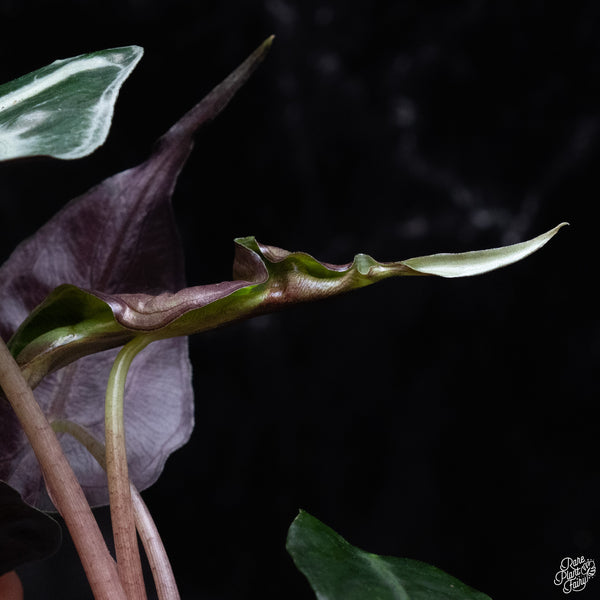
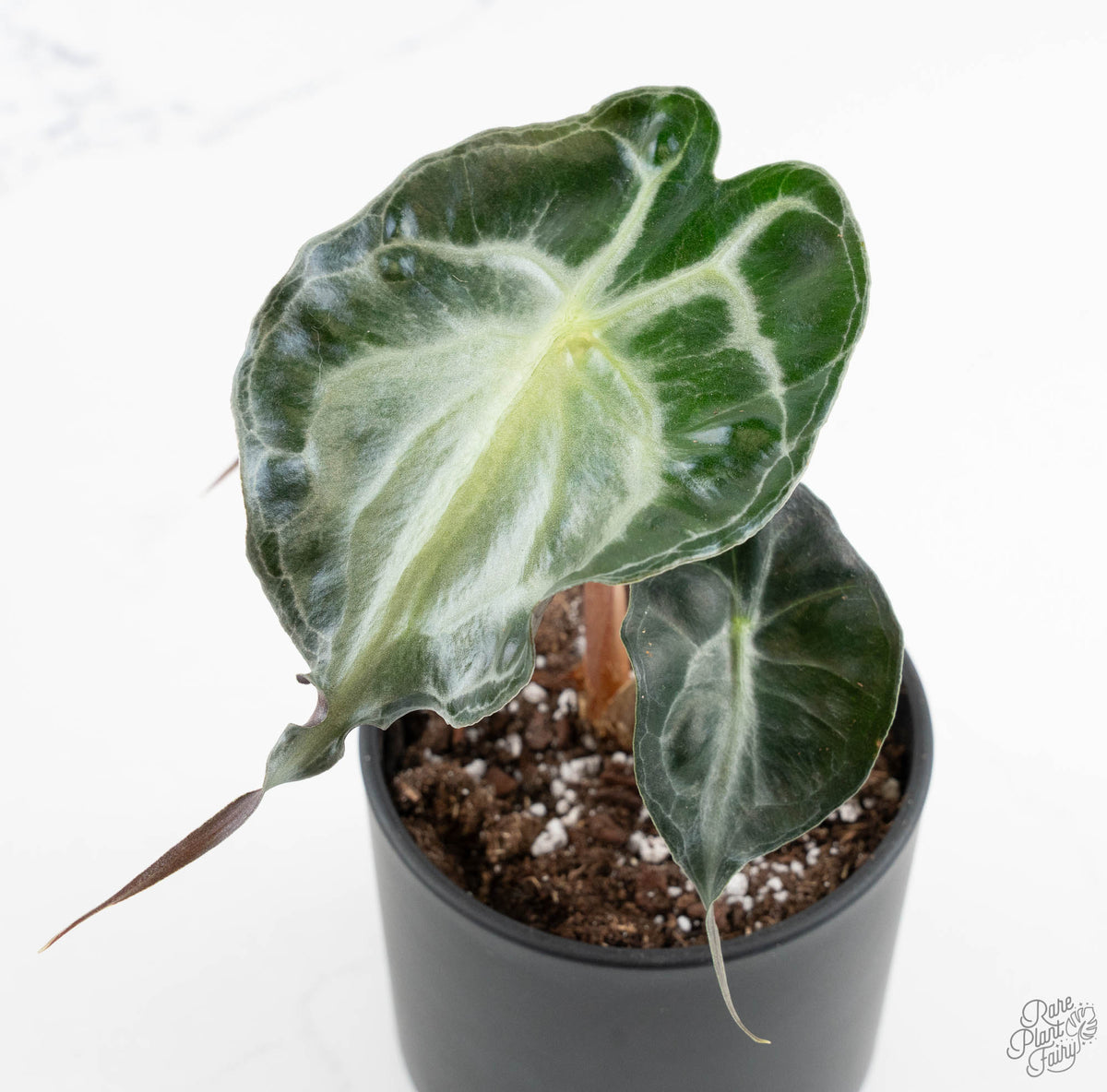
Alocasia ‘Venom’ was discovered around 2019 by Mason Lee of Mason Plants in South Korea as a spontaneous mutation of Alocasia amazonica, itself a hybrid of A. sanderiana and A. longiloba ‘Watsoniana’ developed at Amazon Nursery in Miami in the 1950s. Venom was not a deliberate cross but a chance mutation, which Mason Lee recognized as something distinct enough to name and cultivate separately. The name refers to the most immediately striking feature of the plant: the elongated leaf tip that tapers into a narrow, curling, fang-like extension unlike anything else in the Amazonica lineage.

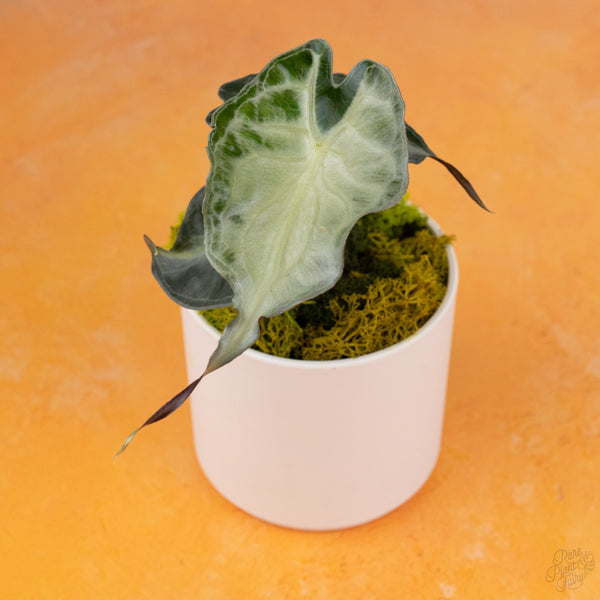
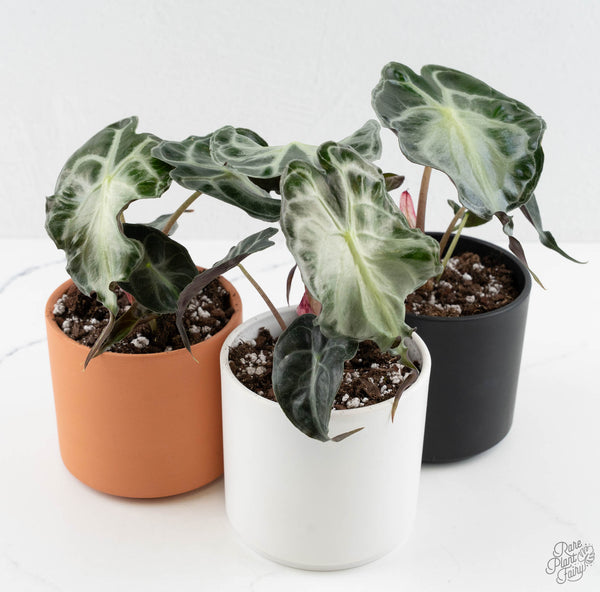
Beyond the distinctive tip, Venom has a character all its own. The leaves are shield-shaped with softly undulating margins and pronounced raised venation. Juvenile leaves emerge darker green, but as the plant matures the foliage develops a pale, matte, silvery-green finish that holds consistently rather than deepening with age. The veins appear slightly lighter than the surrounding tissue, creating subtle contrast rather than the heavy white-on-dark pattern of its Amazonica relatives. The overall effect is quieter and more refined than Polly or Bambino, but the leaf form is genuinely singular. Venom is a slow-to-moderate grower and expects 6–10 weeks between new leaf flushes during the active season, which is normal for the cultivar and not a sign of poor conditions.

Routine Care
Weekly

Watering, Humidity & Temperature

Water when the top inch or two of the soil mix has dried out. Venom is sensitive to overwatering and should never sit in consistently wet soil; the root zone needs to breathe between waterings. Water thoroughly, let it drain completely, and hold off until the mix has partially dried before watering again. In practice this usually means watering every 5–10 days depending on your light, pot size, and season. In winter, extend that interval further and let the soil dry a bit more between cycles.

Humidity should stay at 65% or above. Venom is more demanding on humidity than some other Alocasias, and consistently dry air will show up quickly as browning along the leaf margins and the elongated tip. The tip, being the thinnest part of the leaf, is the first place to show humidity stress. A humidifier running nearby is the most reliable approach. Grouping plants helps somewhat but is rarely sufficient on its own in a typical indoor environment.

Temperature should stay between 65–82°F (18–28°C). Keep Venom away from cold drafts, AC vents, and windows that cool down significantly at night in winter. Temperatures below 60°F will slow the plant considerably, and anything approaching 50°F can cause leaf drop or push the plant into dormancy.

Monthly

Fertilizing & Pruning

During the active growing season (spring through early fall), fertilize every 2–4 weeks with a balanced liquid fertilizer at half strength. Venom is a moderate feeder; consistent light applications through the growing season will support better root development and leaf quality than occasional heavy doses. Reduce fertilizing in fall and stop through winter while the plant is growing slowly or not at all.

Pruning is minimal. Remove any yellowed or damaged leaves at the base with sterilized scissors. Pay attention to the elongated tip of each leaf; if the tip browns while the rest of the leaf is healthy, it is almost always a humidity issue rather than a reason to remove the whole leaf. Venom naturally cycles out older leaves as new ones emerge, which is normal.

Seasonal

Repotting, Support & Propagating from Corms

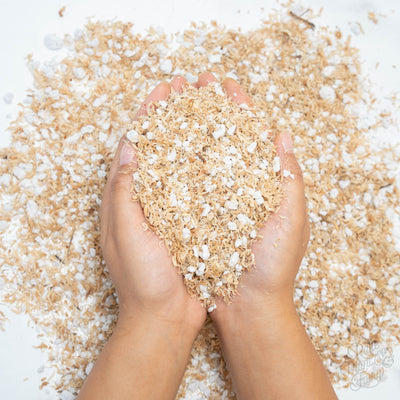
Repot when roots are circling the drainage holes or the plant is pushing out of its container, typically every 1–2 years. Go up one pot size. Like most Alocasias, Venom does not benefit from excess space; a large pot with too much moisture-retaining mix around a small root system is one of the most reliable ways to end up with root rot. Use a chunky, well-draining aroid mix with good airflow at the root zone. Our RPF Aroid Soil Mix is what we use in our nursery and it suits Venom’s needs well.

Venom grows upright from a rhizomatous base and does not require any staking or climbing support. Its growth habit is self-contained and tidy.

Propagation is through rhizome division. A portion of the rhizome with at least one growth eye is required. Attempt division only on a mature plant with multiple crowns and a well-established root system. Separate the division cleanly with a sterilized blade, allow the cut surface to callous briefly, then pot it in moist moss or a fine aroid mix in a warm, humid environment. Division is best done during repotting in spring when the plant is entering active growth.

Fairy Diary: How Alocasias Are Propagated (And Why It Matters for Collectors)

Grower's Notes

The tip of the leaf is browning. Is that normal?

Tip browning on Venom is almost always a humidity issue. The elongated tail-like tip is the thinnest, most exposed part of the leaf and the first place to show stress from dry air. If your humidity is below 60%, tip browning is expected. Check your humidity before adjusting anything else. A single browned tip on an otherwise healthy leaf is not a reason to remove it; the rest of the leaf will continue to photosynthesize normally.

My Venom hasn’t pushed a new leaf in months. Should I be worried?

Venom is a naturally slow grower. During the active season, 6–10 weeks between new leaves is normal for this cultivar. In winter it may pause entirely. If it has been more than three or four months in peak growing conditions with no new growth at all, check the root zone for rot and confirm your light levels are genuinely bright indirect rather than dim. A plant sitting too far from a light source will hold indefinitely rather than push new growth.

My Venom dropped leaves suddenly after I received it. Is it dying?

Probably not. Alocasias in general are reactive to changes in environment, and Venom is no exception. Leaf drop after shipping or a change in conditions is common. As long as the rhizome is firm and intact, the plant is almost certainly recoverable. Keep conditions stable, resist the urge to overwater, and give it time. New growth will follow once it has settled.

The leaves are yellowing. What’s wrong?

Yellowing on Venom is most often caused by overwatering. Check the soil; if it has been consistently wet and the roots show any softness or off smell, trim the affected roots, let the plant dry slightly, and repot into fresh mix. If the roots look healthy and the yellow leaf is an older, lower one while new growth is emerging normally, it is just the plant cycling out older foliage and is not a problem.

Is this plant safe for my pets?

No. All Alocasias, contains calcium oxalate crystals throughout its tissue. Ingestion causes intense irritation of the mouth and throat in both pets and humans. Keep it out of reach of cats, dogs, and small children.

We love seeing your plants thrive-tag us to share your journey @rareplantfairy
Back to top