Alocasia ‘Bambino’ Pink

Alocasia is a genus of around 100 species of tropical aroids native to Southeast Asia and parts of Australia. In the wild they grow as understory plants beneath forest canopy, which is why they crave bright, filtered light and consistent humidity. Most Alocasias grow from corms, dense bulb-like structures at the base of the plant, which is what allows them to go dormant and bounce back after stress or cold. Indoor Alocasias are almost always hybrids or cultivars descended from a handful of species: A. sanderiana, A. longiloba, and A. zebrina show up in the parentage of most of the collector-grade plants you’ll find today. The genus as a whole is characterized by bold, architectural foliage, strong venation, and a growth habit that makes each new leaf an event.
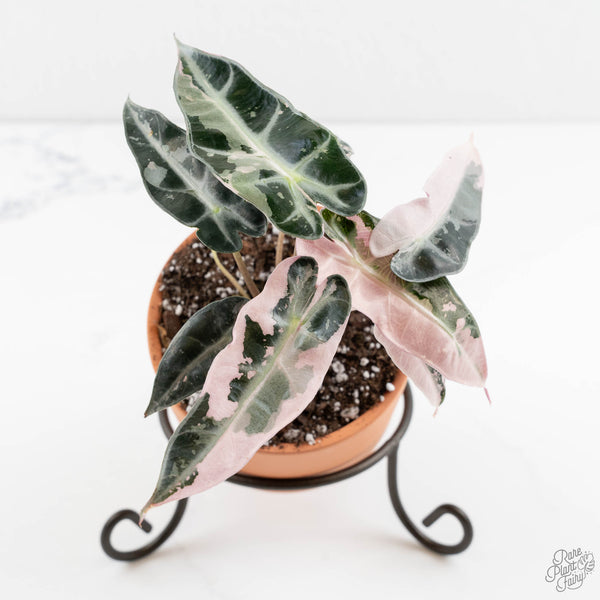
Alocasia ‘Bambino’ is a dwarf cultivar of Alocasia amazonica, itself a hybrid of A. sanderiana and A. longiloba ‘Watsoniana’ developed by Salvadore Mauro at Amazon Nursery in Miami in the 1950s. Bambino is one of the most compact forms to emerge from that lineage, producing narrower, more elongated arrowhead leaves and a tidier growth habit than the standard Amazonica or its close relative Polly. It stays small enough to live comfortably on a shelf or desk, which is a large part of its appeal to collectors working with limited space.
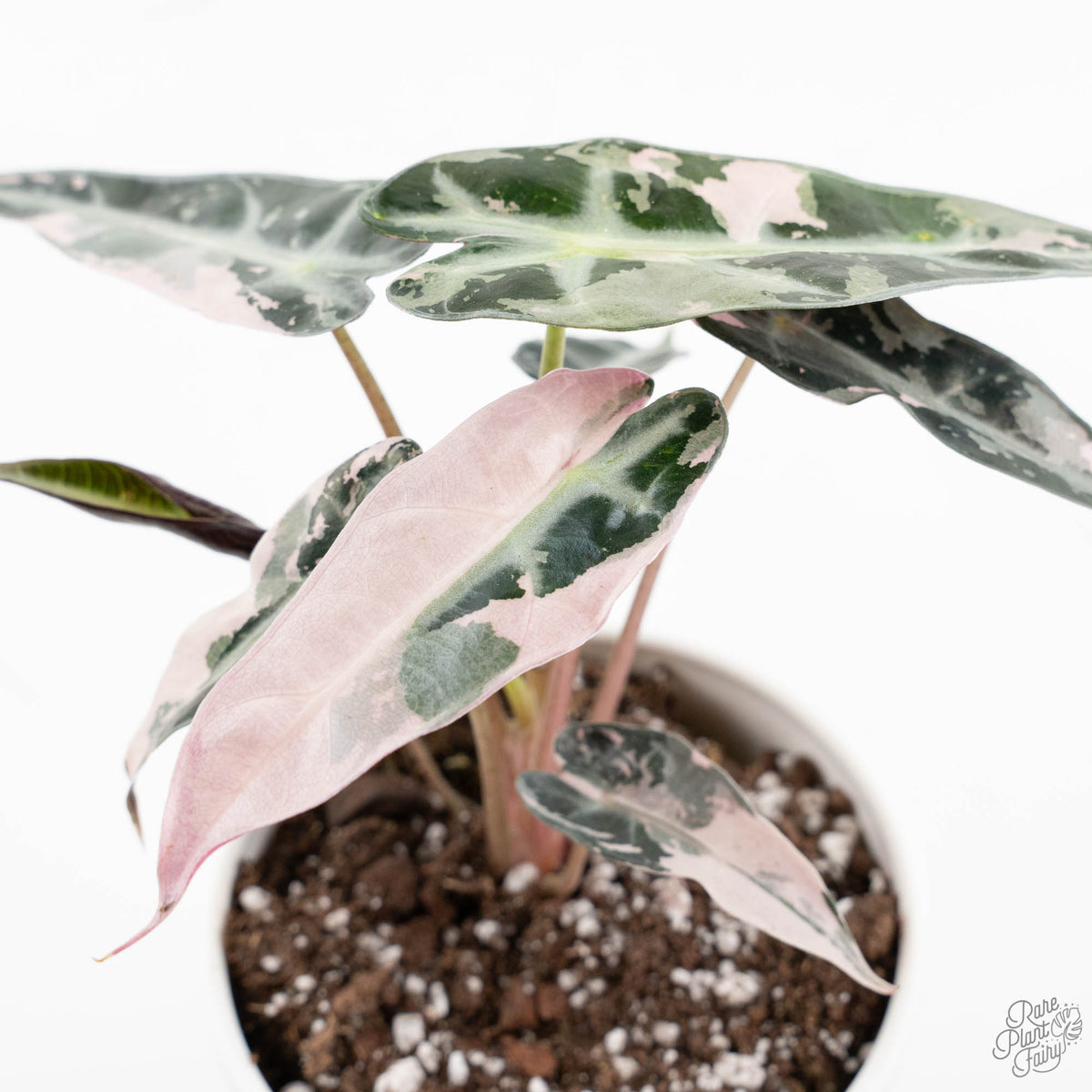
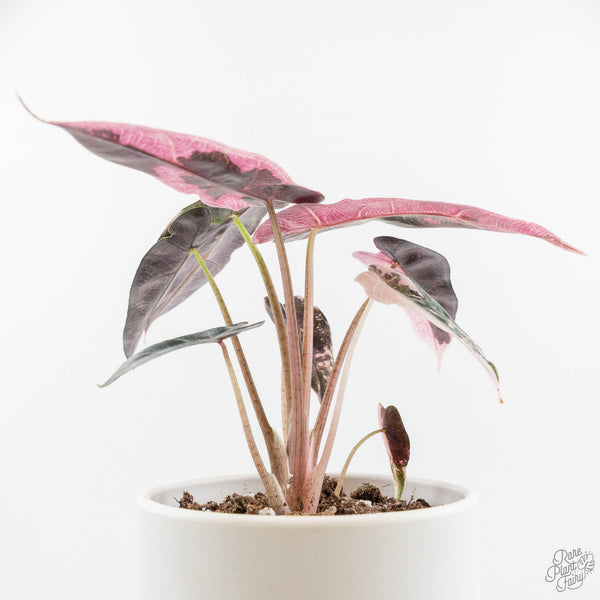
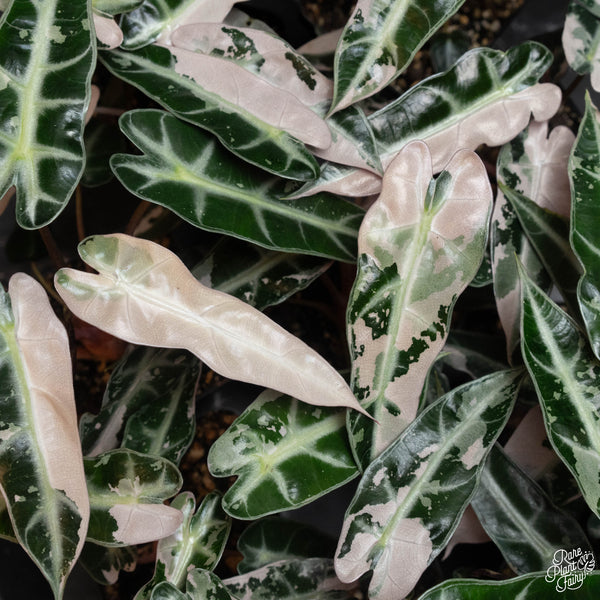
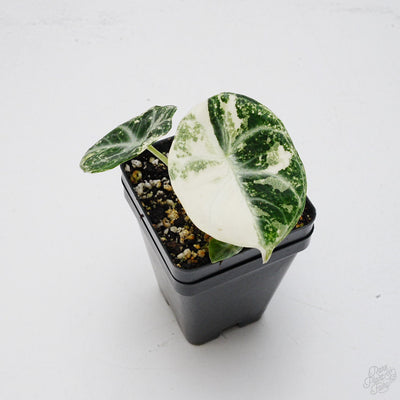
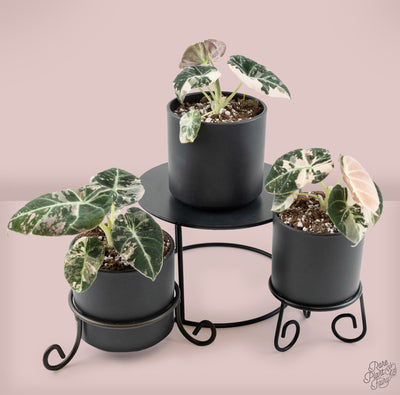
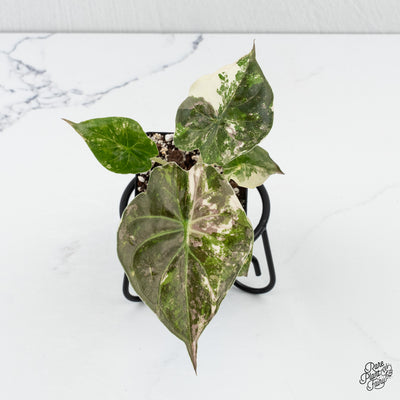
The pink variegated form adds a layer of rarity that puts it in a different category entirely. Stable pink tones in Alocasia are genuinely difficult to achieve and maintain. The variegation on Bambino Pink expresses as irregular splashes and sectors of soft pink, creamy white, and pale green against the deep dark green of the base leaf, with each leaf coming out differently. Because the pink pigmentation in variegated tissue is not driven by chlorophyll, heavily pink leaves have limited photosynthetic capacity and require attentive care to hold their color and stay healthy. No two plants look the same, and no two leaves on the same plant come out identically, which is exactly what serious collectors are after.


Watering, Humidity & Temperature
Water when the top inch or two of the soil mix has dried out. Bambino is more sensitive to overwatering than many other Alocasias, and the pink variegated form is especially prone to root stress when left in consistently wet conditions. Water thoroughly, let it drain completely, and do not water again until the mix has partially dried. In practice this usually means watering every 5–10 days depending on your light, pot size, and season. In winter when growth slows, stretch that interval out further and err on the drier side.
Humidity should stay at 60% or above. Bambino Pink is particularly demanding on this front because its variegated tissue, which lacks the protective capacity of fully chlorophyll-rich cells, is more vulnerable to drying out. Browning at the pink and white sections of the leaf is almost always a humidity issue. A humidifier nearby is the most reliable solution; pebble trays and grouping plants together can help but rarely get you to the levels this plant actually prefers.
Temperature should stay between 65–80°F (18–27°C). Bambino is slightly less cold-tolerant than some larger Alocasias and reacts quickly to temperature swings. Keep it away from drafts, AC vents, and exterior windows during colder months. Anything approaching 55°F can trigger dormancy or leaf drop.
Fertilizing & Pruning
During the active growing season (spring through early fall), fertilize every 2–4 weeks with a balanced liquid fertilizer at half strength. Because variegated tissue has less capacity to photosynthesize, Bambino Pink benefits from consistent, light feeding that keeps nutrients available without accumulating salts in the root zone. Heavy feeding does more harm than good here. Reduce fertilizing in fall and stop through winter while the plant is slowing down.
Pruning is minimal. Remove yellowed or damaged leaves at the base using sterilized scissors. Pay particular attention to any leaves where the pink or white sections have turned fully brown, as these will not recover and are better removed cleanly. Bambino naturally cycles through leaves as it grows, so some loss of older foliage is expected and normal.
Repotting, Support & Propagating from Corms
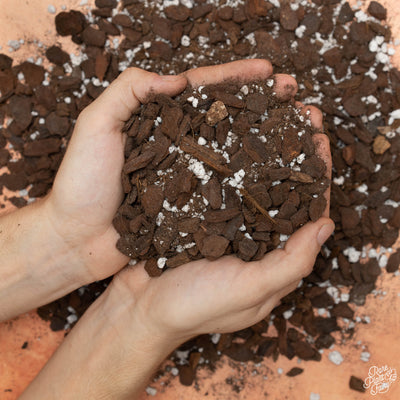
Bambino actually performs well when slightly root-bound and should not be rushed into larger pots. Repot only when roots are actively escaping the drainage holes or the plant is clearly struggling despite good care, typically every 1–2 years at most. When you do repot, go up just one size. An oversized pot with too much moisture-retaining mix around a small root ball is one of the most common causes of root rot in this cultivar. Use a chunky, well-draining aroid mix with good airflow at the root zone. Our RPF Aroid Soil Mix is formulated for exactly this kind of plant.
Bambino is a compact plant and does not need climbing support. It grows upright from a central corm and stays tidy on its own.
Propagation is done through corm division. Inspect the base of the plant when repotting for offset corms, small dense nodules at or beneath the soil line. These can be separated and potted individually in moist moss or a fine aroid mix, kept warm and humid until new growth emerges. Wait until offset corms have produced a leaf of reasonable size before separating them; removing them too early can stall development on both the offset and the parent plant. Variegation in the offsets is not guaranteed to match the parent exactly, which is part of what makes each plant from this cultivar its own thing.
Fairy Diary: How Alocasias Are Propagated (And Why It Matters for Collectors)
The pink sections of the leaves are browning. What’s happening?
This is the most common issue with Bambino Pink and it is almost always a humidity problem. Variegated tissue lacks the moisture-retention capacity of fully green tissue and dries out faster. If your ambient humidity is below 50%, browning on the pink and white sections is nearly inevitable. Check humidity first, then rule out cold drafts and inconsistent watering before looking for other causes. Some marginal browning on very heavily variegated leaves is a normal tradeoff; leaves that are mostly pink or white have very limited ability to sustain themselves.
My plant keeps dropping leaves. Is something wrong?
Bambino is more reactive to change than many houseplants. Leaf drop after shipping, repotting, a location change, or a temperature swing is common and does not mean the plant is dying. As long as the corm is firm and at least one leaf is holding, the plant is likely fine. Keep conditions stable, hold off on repotting or moving it, and give it time. New growth typically follows within a few weeks once the plant settles.
The leaves are yellowing. What’s wrong?
Yellowing on Bambino is most often caused by overwatering or soil that has been allowed to dry out completely. Check the root zone: if the soil has been consistently wet and the roots smell off, trim any soft or mushy roots, let the plant dry out slightly, and repot into fresh mix. If the soil has gone bone dry, water thoroughly and consistently going forward. Yellow on an older lower leaf while new growth is actively emerging is just the plant cycling out older foliage and is nothing to worry about.
Will new leaves always have pink variegation?
Not necessarily, and not always to the same degree. Variegation expression in Bambino Pink can shift from leaf to leaf. Some leaves will come out with strong pink sectors; others may lean more toward cream or white with minimal pink. This is normal. Bright indirect light supports the best variegation expression. Low light can cause new leaves to emerge with reduced or less vivid variegation over time.
Is this plant safe for my pets?
No. All Alocasias, contains calcium oxalate crystals throughout its tissue. Ingestion causes intense irritation of the mouth and throat in both pets and humans. Keep it out of reach of cats, dogs, and small children.