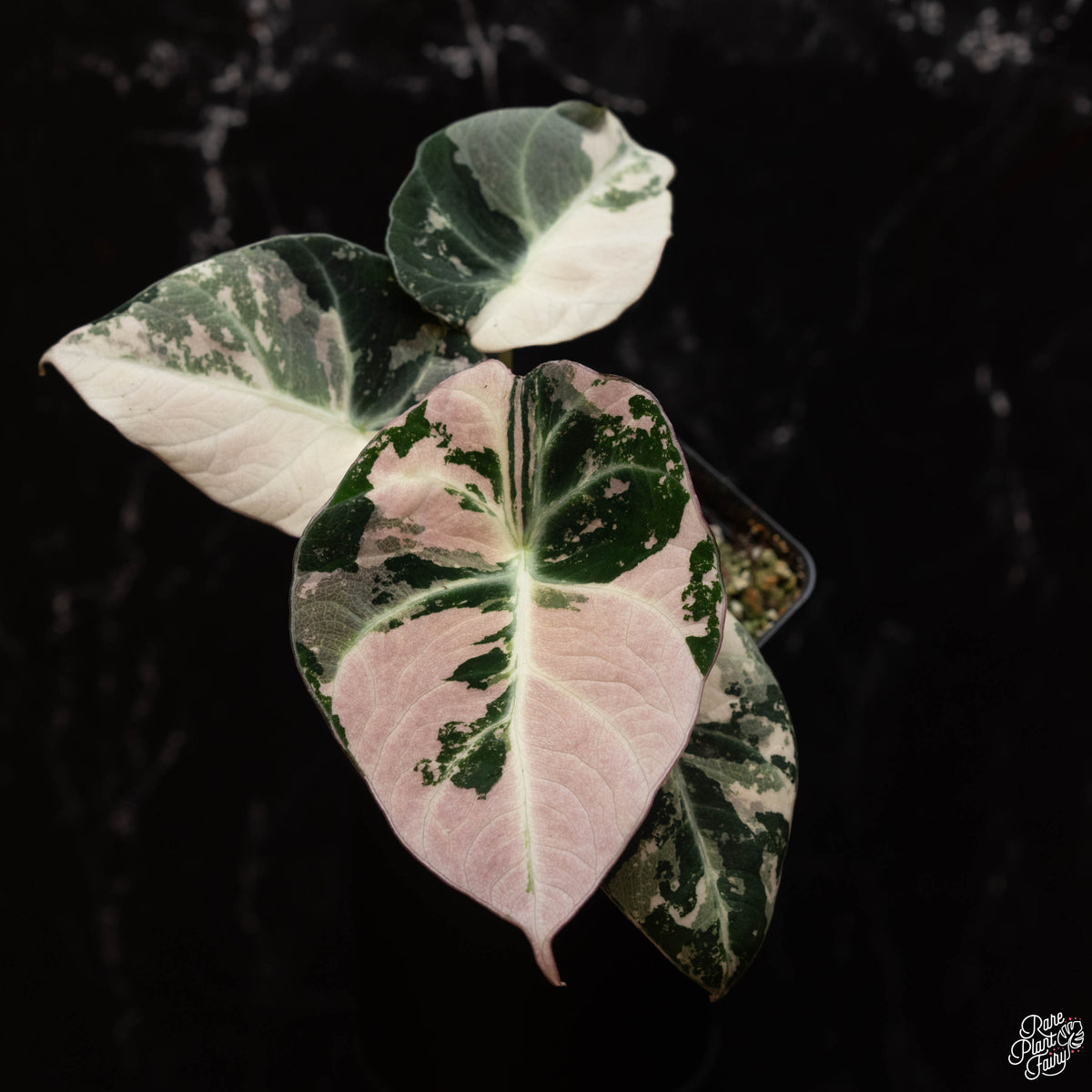
Alocasia 'Black Velvet Pink'

Alocasia is a genus of around 100 species of tropical aroids native to Southeast Asia and parts of Australia. In the wild they grow as understory plants beneath forest canopy, which is why they crave bright, filtered light and consistent humidity. Most Alocasias grow from corms, dense bulb-like structures at the base of the plant, which is what allows them to go dormant and bounce back after stress or cold. Indoor Alocasias are almost always hybrids or cultivars descended from a handful of species: A. sanderiana, A. longiloba, and A. zebrina show up in the parentage of most of the collector-grade plants you’ll find today. The genus as a whole is characterized by bold, architectural foliage, strong venation, and a growth habit that makes each new leaf an event.
Black Velvet is not a hybrid. It is Alocasia reginula, its own distinct species, native to a very specific habitat: the shaded limestone cliffs and rocky slopes of the Tabin Wildlife Reserve in Sabah, Malaysian Borneo. The species name reginula means “little queen,” and the plant earns it. Wild populations were only definitively located and documented in 2021, which means this species was cultivated commercially for decades before botanists had confirmed where it actually grew.
The cultivar entered the trade in the early 1990s when Scott Hyndman introduced it simply as Alocasia ‘Black Velvet’, having sourced a single plant from the Lyon Arboretum in Hawaii, which had received it from a Japanese collector who had reportedly brought it back from Borneo. That one plant went into tissue culture and became the foundation of essentially every Black Velvet in cultivation today. Its origin story is a good reminder of how much of the collector plant world traces back to a single specimen and a chain of curious people.
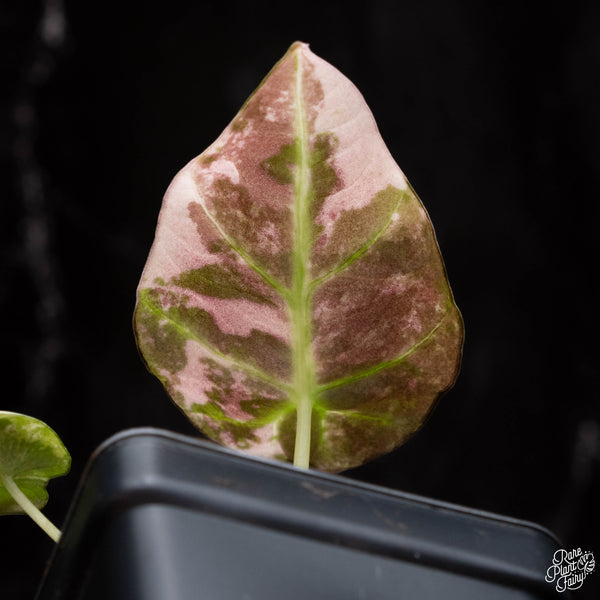
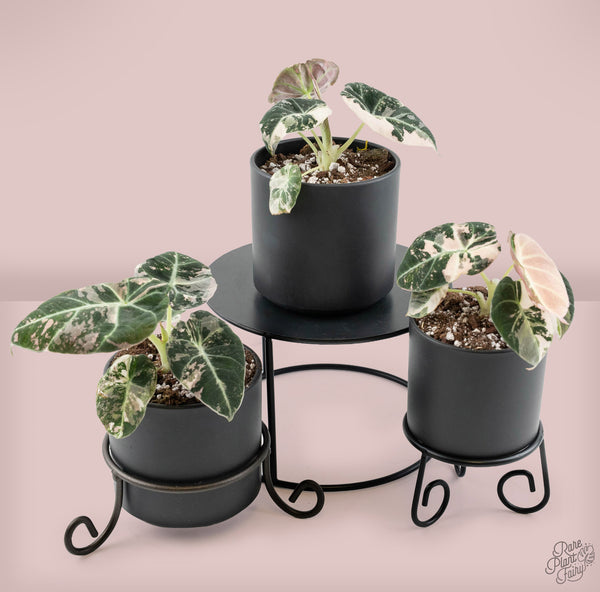
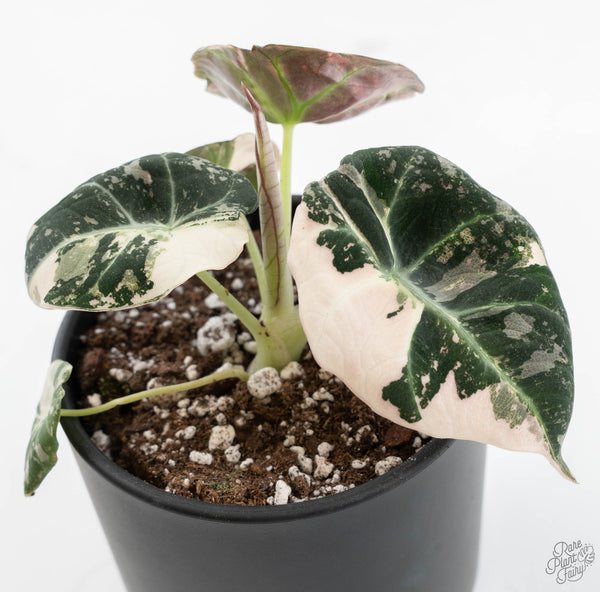
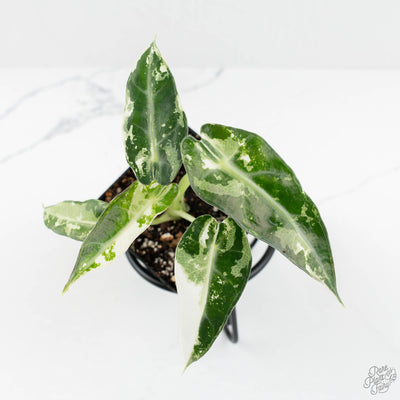
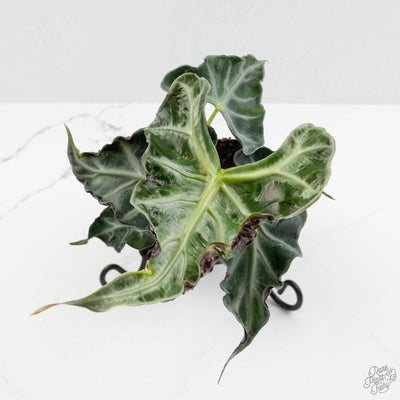
What makes Black Velvet immediately recognizable is its leaf surface: a deep, dark green that reads as near-black, with a matte, suede-like texture unlike the glossy finish of most Alocasias. Bold silver-white veins cut across the surface, reflecting almost the entire visible light spectrum while the surrounding leaf absorbs nearly all of it, which is the physical mechanism behind that high-contrast, almost graphic appearance. The pink variegated form adds irregular sectors of soft pink and pale cream into that composition, making an already striking leaf considerably more rare. Stable pink expression in A. reginula is genuinely uncommon, and because the dark background of the leaf makes the pink sections read differently than they would on a lighter-leaved plant, the color contrast on a well-variegated specimen is exceptional. It is worth noting that pink variegation expression can shift from leaf to leaf and is not guaranteed to be consistent.


Watering, Humidity & Temperature
Drainage is the single most important care consideration for Black Velvet. In its native habitat on limestone cliff faces, this species grows in conditions with excellent drainage and good airflow around the roots. It is significantly more prone to root rot than the Amazonica-derived hybrids, and consistently moist or dense soil is one of the fastest ways to lose it. Water thoroughly when the top inch or two has dried out, let it drain completely, and do not water again until the mix has partially dried. If you tend toward overwatering, terra cotta is a strongly recommended pot material as it wicks moisture away from the root zone.
Humidity should stay between 60–80%. Black Velvet is a humidity-lover by nature but is unusual in that it should not be misted directly. Water sitting on that velvety leaf surface creates conditions for fungal issues. Use a humidifier nearby rather than foliar misting. The pink and cream variegated sections are more susceptible to humidity stress than the dark leaf tissue, so browning on the lighter portions of the leaf is one of the first signs your humidity needs attention.
Temperature should stay between 65–80°F (18–27°C). Black Velvet is not as cold-tolerant as some of the larger hybrid Alocasias. Keep it away from drafts and any location that drops below 60°F. Cold exposure is one of the more common reasons this plant goes into a sudden, dramatic decline.
Fertilizing & Pruning
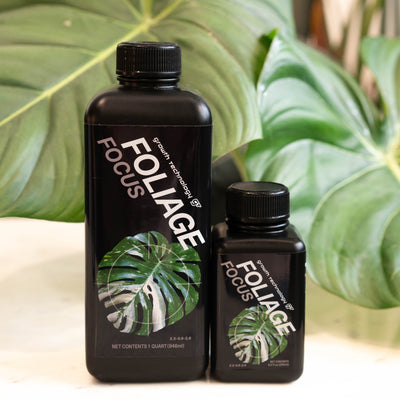
Black Velvet is not a heavy feeder and its sensitive root system does not respond well to excess fertilizer salts. During the active growing season (spring through early fall), fertilize lightly every 4–6 weeks with a balanced liquid fertilizer at quarter to half strength. This is a plant where less is genuinely more. Do not fertilize in fall or winter while the plant is slowing down or dormant.
Pruning is minimal. Remove any yellowed or damaged leaves cleanly at the base with sterilized scissors. Handle the leaves carefully during any maintenance; the velvety surface marks and bruises more easily than glossy-leafed Alocasias, and physical damage to the leaf texture is permanent. Black Velvet naturally drops older leaves as new ones emerge, which is normal.
Repotting, Support & Propagating from Corms
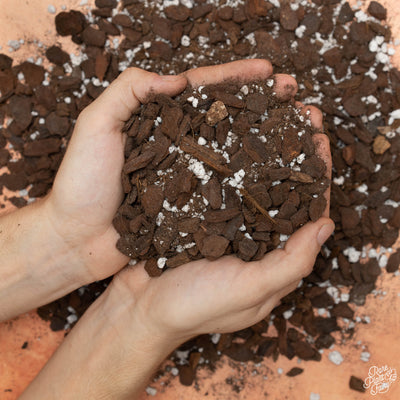
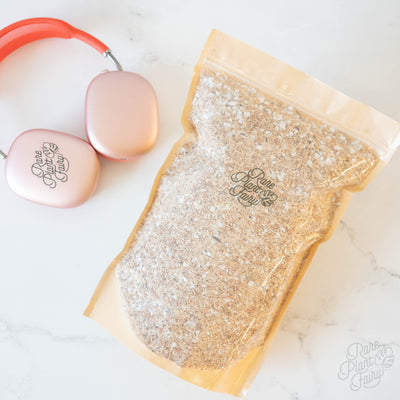
Black Velvet dislikes frequent disturbance and should be repotted as infrequently as possible, typically every 2–3 years, and only when the plant is clearly root-bound. When you do repot, choose a porous, fast-draining mix with significant bark and perlite content. Dense, moisture-retaining potting soils that work fine for other houseplants are a liability for this species. Our RPF Aroid Soil Mix provides the drainage and airflow this plant needs. Go up just one pot size; excess volume in the pot means excess moisture around the roots.
Black Velvet is a compact plant that grows upright from a rhizomatous base and does not need any staking or climbing support.
Propagation is through corm division or offset separation at repotting time. Black Velvet produces offsets from its rhizome base that can be carefully separated once they have reached a reasonable size and developed their own root system. Separate cleanly with a sterilized blade, pot into a fine, well-draining mix, and keep warm and humid until the new plant is established. Attempting to separate very small offsets too early tends to stall both the offset and the parent plant; patience here pays off.
Fairy Diary: How Alocasias Are Propagated (And Why It Matters for Collectors)
The leaf surface looks marked or damaged even though I haven’t done anything to it. What happened?
The velvety texture of Black Velvet leaves marks and bruises very easily from physical contact. Any pressure on the leaf surface, including touching, rubbing against another leaf, or water droplets sitting on it, can leave visible marks that do not go away. This is not a disease or pest issue; it is a property of the leaf surface. Handle this plant as little as possible and avoid direct misting.
My plant is wilting and the leaves are dropping. I haven’t underwatered it.
If the plant has been consistently moist and is now wilting, root rot is the most likely cause. Pull it from the pot and inspect the roots. Healthy roots are white to tan and firm; rotted roots are brown, soft, and may smell off. Trim all affected roots back to healthy tissue with sterilized scissors, let the cut surfaces dry briefly, and repot into fresh, fast-draining mix. Do not water again until the mix has partially dried. Black Velvet recovers from moderate root rot when caught and treated promptly.
The pink sections of the leaves are browning. What’s happening?
Browning on the pink and cream variegated sections is almost always a humidity issue. Variegated tissue lacks the protective capacity of fully pigmented cells and dries out faster. Check your ambient humidity; if it is below 60%, increase it with a humidifier. Also rule out cold drafts and any direct contact with the leaf surface, both of which can cause localized browning on this cultivar.
Will my plant always produce pink variegation?
Not necessarily on every leaf, and not always to the same degree. Pink expression in this cultivar can vary from leaf to leaf. Some leaves will show strong pink sectors; others may lean toward cream or have minimal pink. Bright indirect light supports the best variegation expression. Low light tends to suppress it over time.
Is this plant safe for my pets?
No. All Alocasias, contains calcium oxalate crystals throughout its tissue. Ingestion causes intense irritation of the mouth and throat in both pets and humans. Keep it out of reach of cats, dogs, and small children.