Skip to content
RARE PLANT FAIRY CARE GUIDE

Philodendron 'Billietiae' Variegated Care Guide

At a Glance
Light
BRIGHT, INDIRECTA south or west-facing window with filtered light, or a full-spectrum grow light.
Water
WATER WHEN THE TOP 1–2 INCHES OF SOIL HAVE DRIED OUT.Well-draining mix is essential.
Humidity
HUMIDITY LEVEL60–70%+
Pet Safety
PET SAFETYContains calcium oxalate crystals; toxic to pets and humans if ingested.
Genus Profile

Philodendron is one of the largest genera in the aroid family, with several hundred species native to the tropical Americas, from Mexico down through Central and South America. The name comes from the Greek for “tree lover,” which is fitting: in the wild, most Philodendrons grow as hemiepiphytes, beginning life in the soil, then climbing host trees to reach the canopy where light is more abundant. This climbing habit is what drives one of the most important aspects of Philodendron care: given vertical support, most climbing species produce progressively larger, more complex leaves as they ascend. Without support, they trail and tend to stay in a more juvenile leaf form. Philodendrons as a group are forgiving, fast-growing, and adaptable, which is a large part of why the genus has such a deep presence in collector collections alongside its wild ornamental appeal.

Species Profile

Philodendron billietiae was formally described in 1995 by botanists Simon Mayo and Lucien Lindeman after being documented in French Guiana. The species quickly became recognizable in aroid cultivation for its unusually elongated foliage and vivid orange petioles, which stood apart from the broader heartleaf and lobed Philodendrons common in collections at the time. As the species gained popularity through collectors and specialty growers in the late 1990s and early 2000s, variegated forms began appearing in cultivation and were selectively propagated for their highly ornamental foliage.

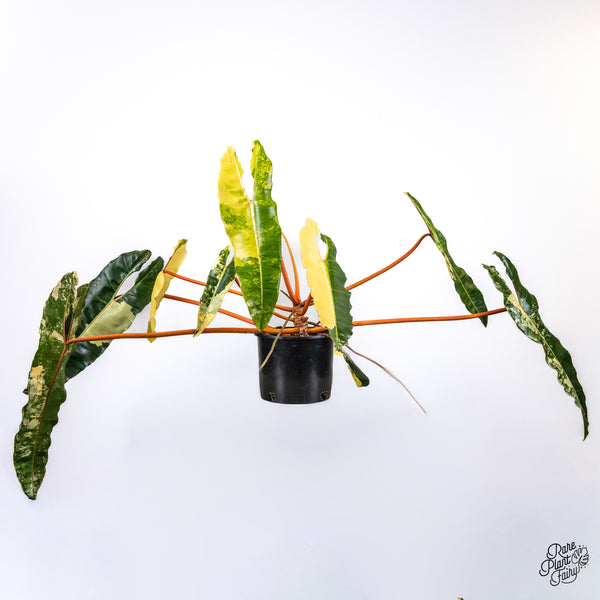
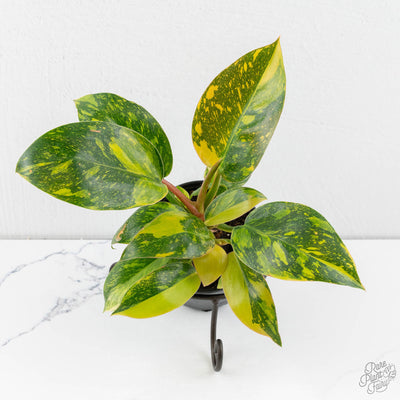
Philodendron billietiae variegated is valued for its unstable chimeric variegation, which produces shifting patterns of cream, yellow, lime, and deep green across the long, narrow leaves. Because the variegation exists in specific active cell layers of the plant, expression can vary dramatically from leaf to leaf. One leaf may emerge heavily sectoral with large cream blocks, while the next may show lighter marbling or predominantly green growth. This unpredictability is part of what makes the plant so appealing to collectors, especially when combined with the species’ naturally dramatic shape and bright orange petioles.

Unlike many climbing Philodendrons, billietiae tends to grow more as a crawler or sprawling climber in cultivation, extending horizontally as the stem matures and thickens over time. Mature plants benefit from support, but they often produce their most natural growth form when allowed space to creep and anchor along a surface. As the stem matures, leaf size increases significantly, producing large architectural foliage with increasingly pronounced texture and coloration.

Shop Philodendron 'Billietiae' Variegated

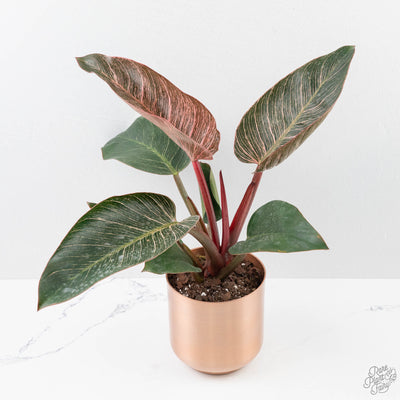
First leaves
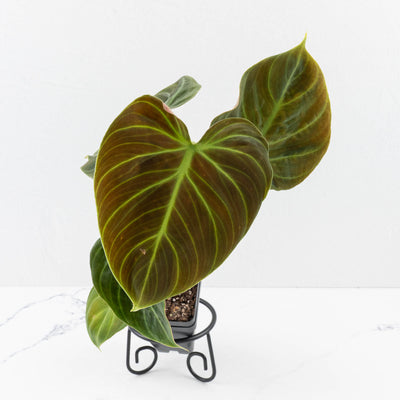
Growing into itself
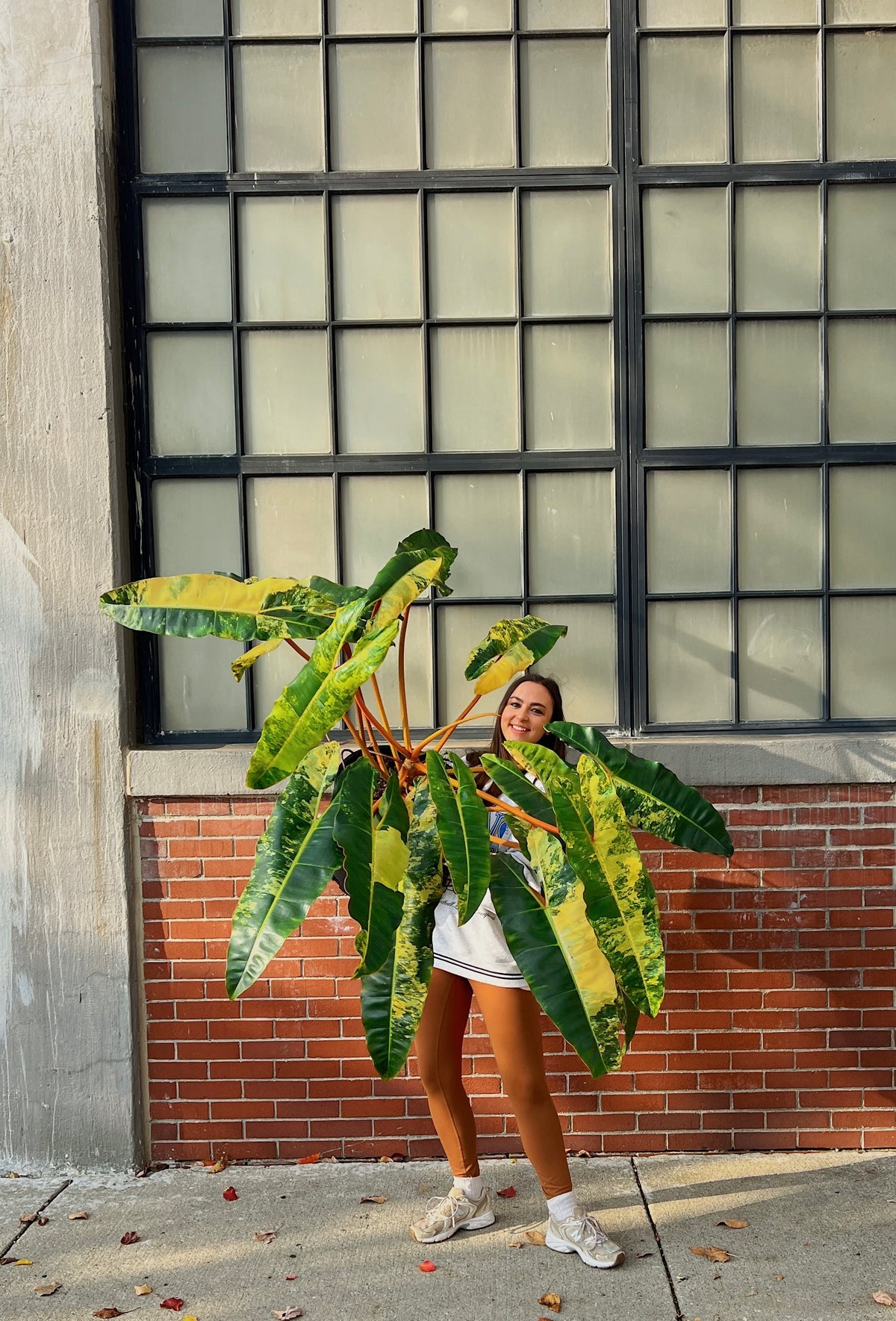
Mature masterpiece
Routine Care
Weekly

Watering, Humidity & Temperature

Water when the top 1–2 inches of the soil mix has dried out. Philodendron billietiae variegated is moderately forgiving about watering compared to more sensitive variegated aroids, but it does not tolerate consistently wet, compacted soil. Water thoroughly, allow full drainage, and do not water again until the upper layer of the mix has started to dry. In active growth this typically means watering every 5–10 days depending on light, pot size, and environment, with reduced frequency in cooler or lower-light periods.

Humidity should stay at 60% or above. Higher humidity supports larger, cleaner leaf development and helps reduce stress on the variegated sections, which are more prone to browning at the margins than fully green tissue. A stable humid environment is especially beneficial during new leaf emergence when variegated tissue is still soft and developing. A humidifier is the most reliable approach for consistent results.

Temperature should remain between 65–85°F (18–29°C). Keep away from cold drafts and sudden temperature swings. Growth will slow significantly below 60°F, and prolonged exposure to cooler conditions can lead to stalling, reduced leaf size, or damage to emerging growth.

Monthly

Fertilizing & Pruning

Philodendron billietiae variegated is a steady to moderate grower and responds well to consistent feeding during active growth. Fertilize every 2–4 weeks from spring through early fall with a balanced liquid fertilizer at half strength. Regular feeding supports stronger leaf development, better overall vigor, and more stable variegation expression. Reduce feeding in fall and pause through winter as growth slows.

Because variegation in billietiae variegated is chimeric, expression can shift depending on plant vigor, light levels, and which growth points are active. Strong, consistent growth conditions often help maintain more balanced variegation, while low light or stress can lead to greener growth over time. This is normal for unstable variegated aroids and can fluctuate across the plant’s lifespan.

Pruning is mainly done to manage size, remove damaged foliage, or control growth direction. If the plant produces a run of predominantly green leaves, cutting back to a node that previously showed strong variegation can sometimes encourage more patterned growth, though results are not guaranteed. Always use sterilized tools and make clean cuts just above a node.

Seasonal

Repotting, Support & Propagation

Repot when roots are circling the drainage holes or the plant is pushing out of its container, typically every 1–2 years. Go up one pot size. Use a chunky, well-draining aroid mix with good organic content and airflow at the root zone. Philodendron billietiae variegated prefers a mix that retains light moisture while still allowing strong aeration around the roots.

Support is optional but can influence growth habit. Philodendron billietiae is naturally a crawler to sprawling grower in maturity, often extending horizontally as the stem thickens. In cultivation it can also be trained onto a moss pole or plank, where it will produce slightly more upright growth and larger leaves over time. Without support, it will typically express its more natural sprawling habit, which many growers prefer for mature plants. Neither approach is incorrect, but allowing space for horizontal growth often suits this species well.

Propagation is through stem cuttings with at least one node. Philodendron billietiae variegated roots readily in water or moist moss. When selecting a cutting, choose a node from a section of stem that is actively producing well-variegated leaves. Because the variegation is chimeric, cuttings taken from greener growth points are more likely to continue producing greener foliage, while well-variegated sections give the best chance of maintaining pattern expression. There is no guarantee, but starting from a well-variegated node gives the best odds.

Grower's Notes

Is this plant safe for my pets?

No. Philodendron billietiae variegated contains calcium oxalate crystals throughout its tissue. If ingested, it can cause intense irritation of the mouth and throat in both pets and humans. Keep out of reach of cats, dogs, and small children.

Why does each leaf look different?

Philodendron billietiae variegated has chimeric variegation, meaning expression shifts depending on which growth tissues are active at the time. This results in unpredictable patterns from leaf to leaf, ranging from heavily variegated sectors to mostly green growth with light marbling. This variability is normal and part of the plant’s character.

Why are the variegated sections browning?

Browning on the cream or lighter sections is most often linked to low humidity, inconsistent watering, or environmental stress. The variegated tissue is more sensitive and can dry out faster than green tissue. If humidity is below 50–60%, increasing it will help. Cold drafts and harsh direct sun can also contribute, especially on newer leaves.

Why are the leaves getting smaller over time?

This is usually caused by insufficient light, lack of maturity, or environmental stress. Billietiae produces its largest leaves when actively growing in bright, stable conditions. If growth is weak or stretching toward light, leaf size will reduce. Once conditions stabilize and the plant establishes, leaf size typically improves again.

How do I get bigger leaves?

Provide strong bright indirect light and allow the plant time to mature and establish. Philodendron billietiae produces significantly larger leaves as it develops longer stems and stronger root systems. A moss pole or support can help guide growth, but this species often reaches its most natural mature form as a crawler. Consistent feeding during the growing season and stable humidity also support larger leaf development.

SHOW US WHERE THE MAGIC GROWS @RAREPLANTFAIRY
Back to top