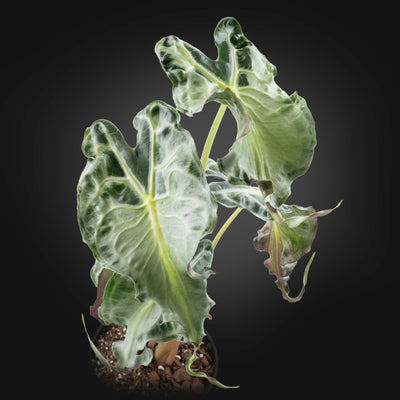
Alocasia 'Nobilis' Pink Variegated

Alocasia is a genus of around 100 species of tropical aroids native to Southeast Asia and parts of Australia. In the wild they grow as understory plants beneath forest canopy, which is why they crave bright, filtered light and consistent humidity. Most Alocasias grow from corms, dense bulb-like structures at the base of the plant, which is what allows them to go dormant and bounce back after stress or cold. Indoor Alocasias are almost always hybrids or cultivars descended from a handful of species:A. sanderiana,A. longiloba, andA. zebrinashow up in the parentage of most of the collector-grade plants you’ll find today. The genus as a whole is characterized by bold, architectural foliage, strong venation, and a growth habit that makes each new leaf an event.
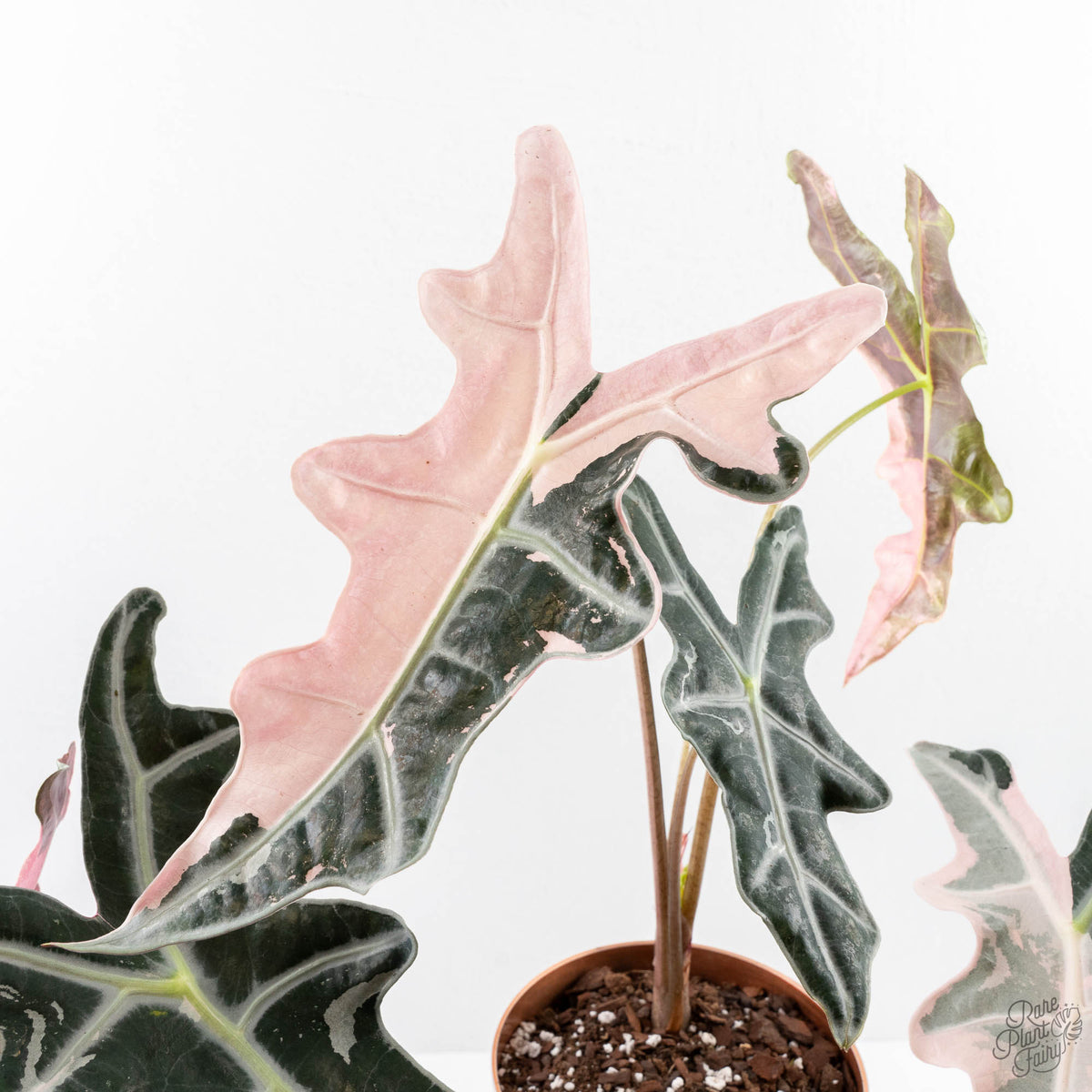
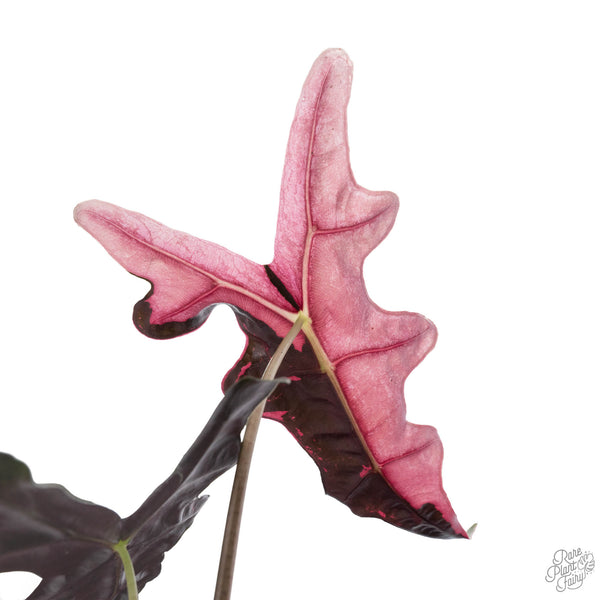
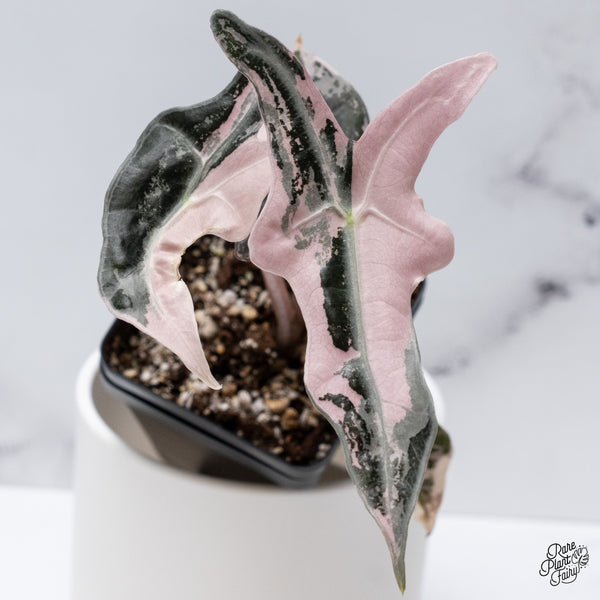
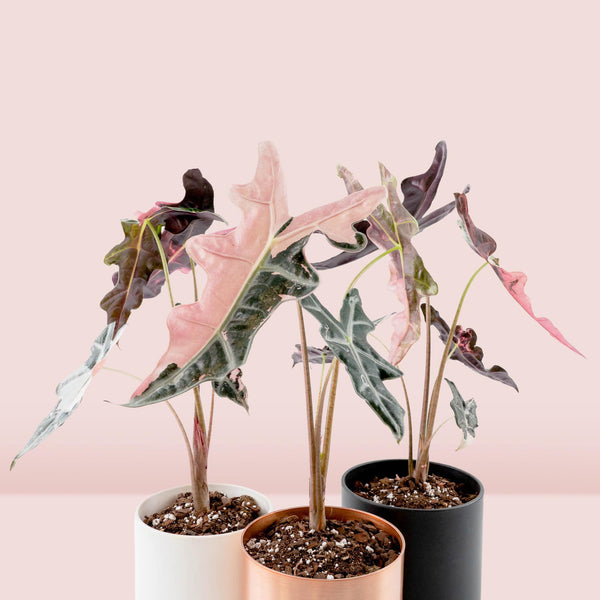
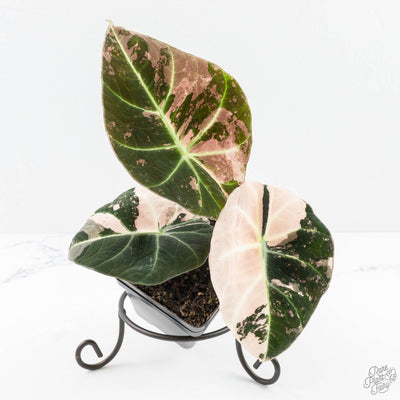
Alocasia sanderiana 'Nobilis' Pink Variegated is a rare cultivar of one of the most iconic Alocasia species, known for its elongated, arrow-shaped leaves, pronounced venation, and refined foliage pattern. Alocasia sanderiana is native to the Philippines, where it grows as an understory plant beneath tropical forest canopies, adapting to bright filtered light, warmth, and consistently humid conditions. The 'Nobilis' form is distinguished by its pink variegation, with soft blush tones appearing across deep green leaves in unique marbled, sectoral, or patch-like patterns. Each leaf develops its own expression of color, with new growth often emerging with stronger pink tones that mature into a blend of green, cream, and rose hues. Like other Alocasias, 'Nobilis' grows from a corm, a dense underground storage structure that allows the plant to conserve energy and regrow after periods of stress or dormancy. This cultivar maintains the classic Alocasia sanderiana silhouette, with elongated leaf blades, raised veins, and a compact upright growth habit that makes it a standout among collector Alocasias.


Water, Humidity & Temperature
Water when the top 1–2 inches of soil mix has dried out. Alocasia sanderiana 'Nobilis' Pink Variegated is sensitive to overwatering, and its variegated foliage makes it especially prone to root stress if kept in consistently wet conditions. Water thoroughly, allow excess water to drain completely, then wait until the mix has partially dried before watering again. During active growth, this typically means watering every 5–10 days depending on light levels, pot size, temperature, and humidity. In winter or periods of slower growth, extend the interval and allow the soil to dry slightly further between waterings.
Humidity should stay at 60% or higher. Alocasia sanderiana 'Nobilis' Pink Variegated benefits from stable humidity due to its delicate variegated tissue, which can be more sensitive to environmental stress than fully green foliage. Low humidity may appear first as browning, crisping, or drying along the pink and lighter-colored sections of the leaves. A humidifier is the most reliable method for maintaining consistent conditions, while pebble trays and grouping plants may provide some additional support but typically do not raise humidity significantly on their own.
Temperature should remain between 65–80°F (18–27°C). Alocasia sanderiana 'Nobilis' prefers warm, stable conditions and can respond poorly to sudden temperature fluctuations. Keep the plant away from cold drafts, air conditioning vents, and chilly windows. Temperatures below 60°F (15°C) may trigger stress, leaf decline, or dormancy as the plant conserves energy in its corm.
Fertilizing & Pruning
During the active growing season (spring through early fall), fertilize every 2–4 weeks with a balanced liquid fertilizer at half strength. Because variegated tissue has reduced photosynthetic capacity, this cultivar benefits from steady but gentle feeding to support consistent growth without overloading the root zone with salts. Over-fertilizing can lead to root stress more quickly in this plant than in fully green Alocasia. Reduce feeding in fall and stop through winter as growth slows.
Pruning is minimal and mainly for cleanup. Remove fully yellowed or damaged leaves at the base using sterilized scissors. Leaves that have lost their pink or white sections to browning will not recover and should be removed cleanly to maintain plant health and airflow. It is normal for older leaves to decline as new ones emerge, as Alocasia naturally cycle foliage from the central corm.
Repotting, Dormancy & Corm Propagation
Alocasia sanderiana 'Nobilis' Pink Variegated performs best when slightly root-bound and should not be repotted too frequently. Repot only when roots are clearly filling the container or growing through drainage holes, typically every 1–2 years. When repotting, move up only one pot size to prevent excess moisture retention around the root system. A chunky, airy aroid mix is essential, as dense or poorly draining soil can quickly lead to root and corm stress in this cultivar. The plant maintains an upright growth habit supported by sturdy petioles emerging from a central corm and does not require structural support.
Propagation is done through corm division. Small corms and offsets may form naturally around the base of the plant and can be separated during repotting once they are large enough to establish independently. These should be started in moist sphagnum moss or a fine, well-aerated propagation mix under warm, humid conditions until roots and new growth develop. Pink variegation expression can vary between offsets, as each new plant may inherit different amounts and patterns of variegated tissue. Growth patterns and coloration may continue to develop as the plant matures.
Fairy Diaries: How Alocasias Are Propagated (And Why It Matters for Collectors)
The pink sections of the leaves are browning. What's happening?
This is one of the most common issues with Alocasia sanderiana 'Nobilis' Pink Variegated and is usually related to humidity, watering consistency, or environmental stress. The pink variegated tissue contains less chlorophyll than the green portions of the leaf, making it more susceptible to moisture loss and damage. As a result, browning or crisping often appears first along the pink areas or leaf margins. Humidity below 60%, cold drafts, sudden temperature fluctuations, inconsistent watering, or prolonged dry soil can all contribute. Some browning on heavily variegated pink sections is normal over time, particularly on leaves with large areas of pink tissue, as these portions are naturally more delicate and have a shorter lifespan than fully green tissue.
My plant keeps dropping leaves. Is something wrong?
Alocasia sanderiana 'Nobilis' Pink Variegated is highly responsive to environmental changes, and leaf loss can occur after shipping, repotting, relocation, or sudden shifts in temperature, humidity, or light. This is a normal stress response and does not necessarily indicate that the plant is unhealthy. As long as the corm remains firm and the root system is healthy, the plant can recover even if it loses all of its foliage. Because the pink variegated tissue is more delicate than fully green tissue, the lighter areas of the leaves may show stress first through browning or crisping. Keep conditions warm, humid, and consistent, avoid unnecessary repotting or moving the plant, and allow time for it to acclimate. Once established, new growth will typically resume from the corm.
The leaves are yellowing. What’s wrong?
Yellowing is most often caused by overwatering, poor drainage, or soil that has stayed too dry for too long. Check the root zone first. If the soil is consistently wet and roots are soft, allow the plant to recover in a lighter mix and reduce watering frequency. If the soil has fully dried out, resume a more consistent watering schedule. It is also normal for the oldest lower leaf to yellow and die as new leaves emerge, as Alocasia naturally cycle foliage.
Will new leaves always have pink variegation?
No. Variegation in Alocasia sanderiana 'Nobilis' Pink Variegated is naturally unstable and can vary significantly from leaf to leaf. Some leaves may emerge with extensive pink variegation, while others display a mix of pink, cream, and green, or appear mostly green with only subtle markings. This variation is a normal characteristic of the cultivar. Providing bright, stable indirect light helps encourage stronger variegation, though no two leaves are ever guaranteed to develop the same pattern or intensity.
Is this plant safe for my pets?
No. All Alocasias, contains calcium oxalate crystals throughout its tissue. Ingestion causes intense irritation of the mouth and throat in both pets and humans. Keep it out of reach of cats, dogs, and small children.