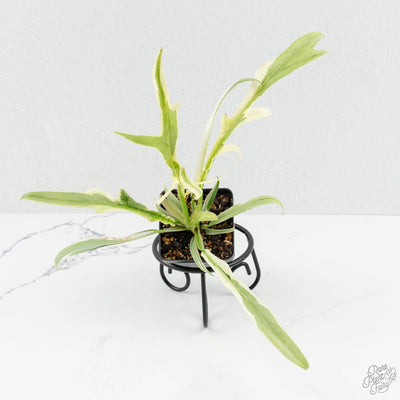
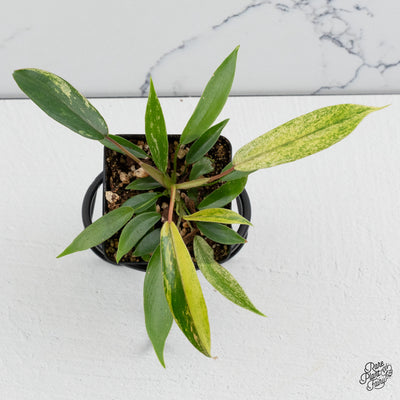
Philodendron 'Caramel Marble'

Philodendron is one of the largest genera in the aroid family, with several hundred species native to the tropical Americas, from Mexico down through Central and South America. The name comes from the Greek for “tree lover,” which is fitting: in the wild, most Philodendrons grow as hemiepiphytes, beginning life in the soil, then climbing host trees to reach the canopy where light is more abundant. This climbing habit is what drives one of the most important aspects of Philodendron care: given vertical support, most climbing species produce progressively larger, more complex leaves as they ascend. Without support, they trail and tend to stay in a more juvenile leaf form. Philodendrons as a group are forgiving, fast-growing, and adaptable, which is a large part of why the genus has such a deep presence in collector collections alongside its wild ornamental appeal.
Philodendron ‘Caramel Marble’ is a highly variegated cultivar of Philodendron erubescens, a climbing species native to the tropical regions of the Americas and widely used throughout cultivated aroid breeding. The erubescens group has long been valued in Philodendron development for its vigorous climbing habit, strong aerial root production, and its ability to produce increasingly large and complex leaves as it matures.
Caramel Marble is a modern collector-era selection that emerged through cultivation and propagation of unstable chimeric variegation within erubescens material, rather than from a formally documented hybrid cross or a single recorded breeder. It began circulating in the late 2010s to early 2020s through collector networks and specialty growers, where uniquely patterned plants were selected and multiplied for their ornamental foliage.
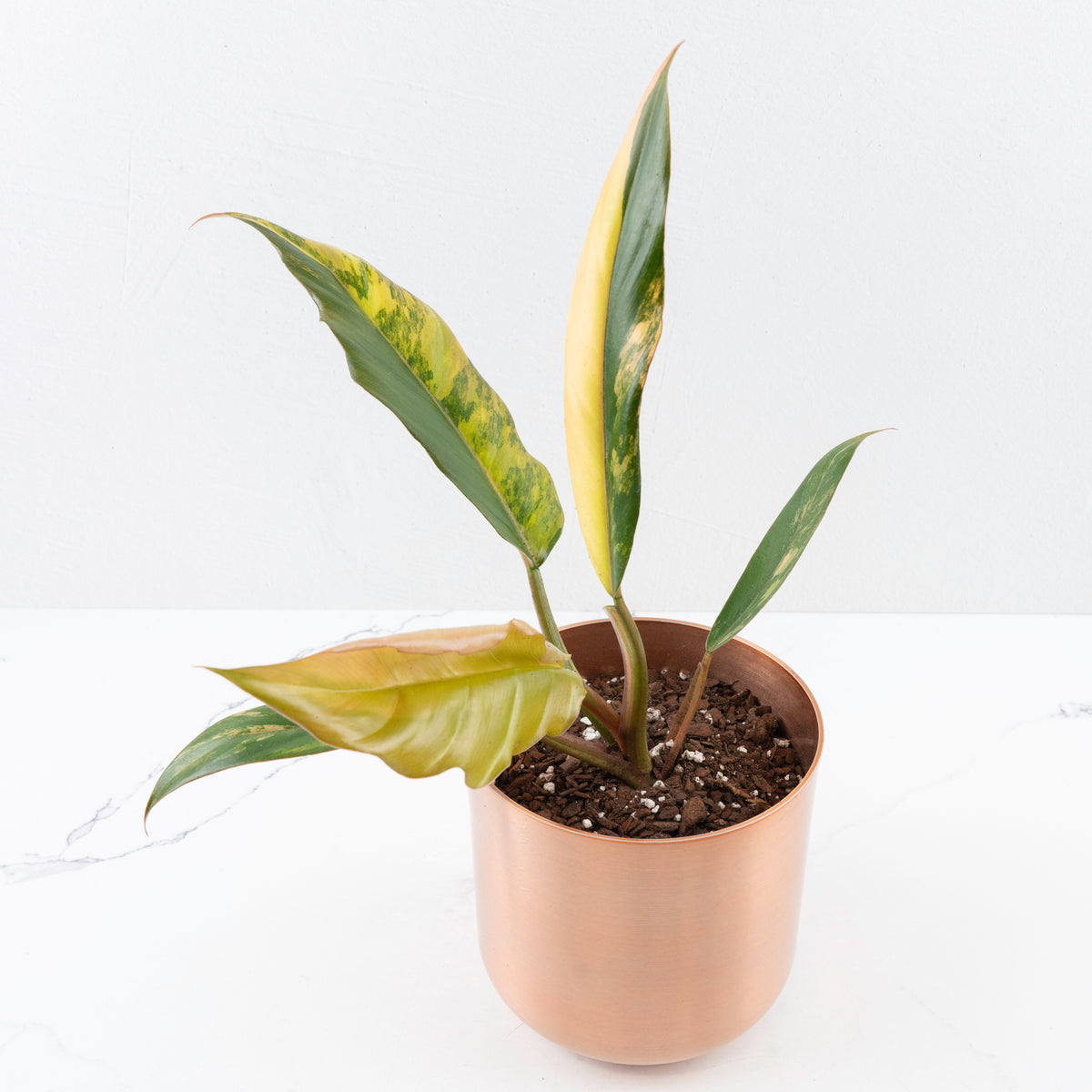
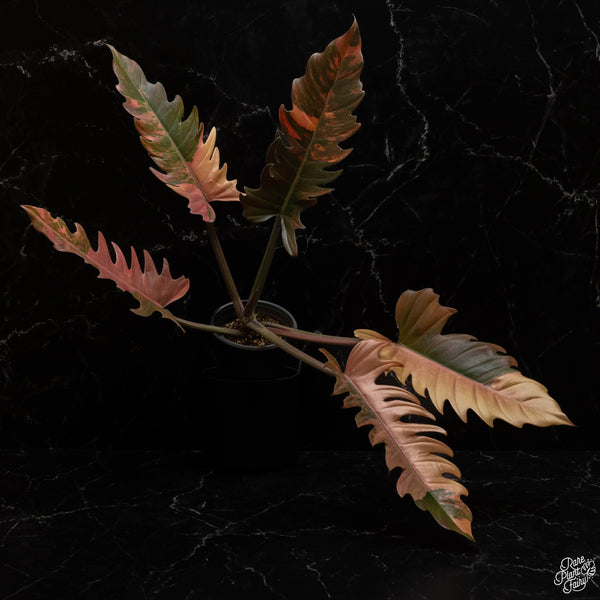
Its defining feature is chimeric variegation, where irregular patches of green, cream, yellow, and warm caramel tones appear across each leaf. Because this variegation is expressed through specific active cell layers at the growth point, it is inherently unstable and can shift significantly from leaf to leaf. One leaf may emerge heavily marbled with caramel and cream, while the next may be greener or show lighter, more subtle streaking. This variability is a key part of its appeal and what makes each plant visually dynamic over time.
Like other climbing Philodendrons, leaf size, shape, and visual complexity increase as the plant matures, particularly when provided with vertical support such as a moss pole. Without support, growth remains more juvenile and trailing, with smaller leaves and longer internodes, while climbing growth encourages larger, more defined foliage and stronger expression of variegation.
Starter
Juvenile
MatureWatering, Humidity & Temperature
Water when the top inch or two of the soil mix has dried out. Caramel Marble is reasonably forgiving about watering compared to some more sensitive variegated aroids, but it dislikes sitting in consistently wet soil. Water thoroughly, let it drain completely, and do not water again until the mix has partially dried. In practice this typically means watering every 5–10 days depending on your light, pot size, and season. In winter when growth slows, extend that interval further.
Humidity should stay at 60% or above. Caramel Marble benefits noticeably from higher humidity, especially as leaves increase in size and variegation becomes more pronounced with maturity. The lighter cream and caramel sections are more susceptible to browning at the margins in dry conditions than the darker green tissue. A humidifier nearby is the most reliable approach, particularly for larger established plants producing mature foliage.
Temperature should stay between 65–85°F (18–29°C). Keep it away from cold drafts and AC vents. Caramel Marble is a tropical climbing Philodendron and growth will slow significantly below 60°F; prolonged exposure to cold conditions can cause leaf damage and reduced vigor.
Fertilizing & Pruning
Caramel Marble is a vigorous grower and a moderate to active feeder during the growing season. Fertilize every 2–4 weeks from spring through early fall with a balanced liquid fertilizer at half strength. Consistent feeding through the growing season supports faster growth, larger foliage, and stronger variegation expression. Reduce feeding in fall and stop through winter as growth slows.
Because Caramel Marble is chimerically variegated, variegation can fluctuate over time depending on active growth tissue and overall plant vigor. Some growers find that brighter light and steady nutrition help maintain stronger caramel and cream expression, though no method guarantees a specific pattern or color balance from leaf to leaf.
Pruning is primarily done to manage the vine and remove damaged or heavily reverted leaves if desired. If the plant begins producing a run of mostly green leaves, pruning back to a node that previously showed strong variegation can sometimes encourage more variegated growth, though results are not guaranteed. Use sterilized scissors and make clean cuts just above a node.
Repotting, Support & Propagation
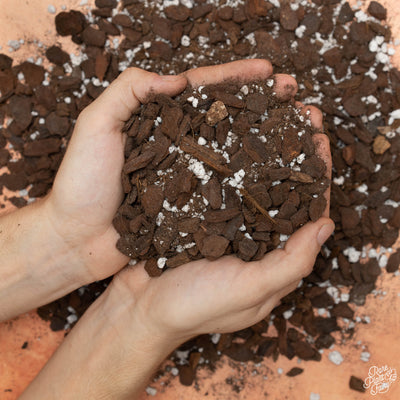
Repot when roots are circling the drainage holes or the plant is pushing out of its container, typically every 1–2 years. Go up one pot size. Use a chunky, well-draining aroid mix with good organic content and airflow at the root zone. Caramel Marble performs best in a mix that retains some moisture while still allowing strong aeration around the roots.
Support is important for this plant and will meaningfully change what it produces. Caramel Marble is a vigorous climbing Philodendron, and when given a moss pole, plank, or other vertical support, it will produce progressively larger leaves with stronger shape and more dramatic variegation as it matures upward. Without support it will trail, which produces smaller leaves and longer internodes. Neither approach is wrong, but if your goal is mature-form foliage, giving it something to climb is the most effective way to achieve it.
Propagation is through stem cuttings with at least one node. Caramel Marble roots readily in water or moist moss. When selecting a cutting, choose a node from a stem that has recently produced strong variegation; because the variegation is chimeric, cuttings taken from heavily green sections of the vine are more likely to continue producing greener growth. There is no guarantee, but starting from a well-variegated node gives the best odds.
Why are the leaves stuck while unfurling?
Stuck or damaged unfurling is usually related to low humidity or inconsistent moisture during active growth. Larger variegated leaves require more humidity to expand cleanly. Maintaining stable moisture, higher humidity, and warm temperatures will significantly improve leaf unfurling over time.
Why are the new leaves emerging orange or bronze?
New leaves on Caramel Marble often emerge in warm bronze, caramel, or copper tones before hardening off. This is a normal part of the plant’s development and one of the traits collectors value most about the cultivar. As the leaf matures, the tones shift and settle into a more stable combination of green, cream, yellow, and caramel coloration.
My Caramel Marble keeps pushing greener leaves. Is it reverting?
This is one of the most common concerns with Caramel Marble and it does not necessarily mean the plant is permanently reverting. Because the variegation is chimeric, expression depends on which cell layers are active in the growth point at any given time. Some leaves may emerge heavily marbled, while others may be mostly green. Increasing light levels is the first thing to try, as brighter conditions generally support stronger variegation expression. Pruning back to a node that previously produced strong variegation can sometimes help redirect growth through a more active variegated section of the stem, though results are never guaranteed.
The leaves are getting smaller over time. What’s happening?
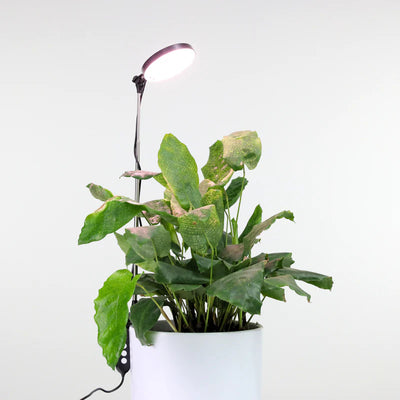
Shrinking leaf size on a climbing Philodendron almost always means the plant is not receiving adequate light, is lacking vertical support, or both. Caramel Marble produces its largest and most dramatic foliage when it is climbing and receiving bright indirect light. Without a support structure, it will remain more juvenile and produce smaller leaves with longer internodes. Adding a moss pole and increasing light are the most effective ways to reverse this.
The edges of the cream and caramel sections are turning brown. What’s wrong?
Browning on the lighter variegated portions of the leaf is most often a humidity issue. The cream and caramel sections are more sensitive to dryness than the green tissue and can brown more easily in dry indoor air. Check your ambient humidity first. If it is below 50–60%, increasing it should be the priority. Cold drafts, inconsistent watering, and excessive direct sun can also contribute to browning along the margins.
How do I get bigger leaves?
Give it something to climb and give it more light. Those two factors drive leaf size more than anything else in Caramel Marble. A moss pole that the plant can root into as it climbs will produce the most dramatic size increase over time. Consistent fertilizing through the growing season and maintaining good humidity will support stronger mature growth once those conditions are in place.
Will stronger light increase the orange and caramel tones?
Yes. Bright indirect light and gentle periods of direct morning or late afternoon sun can intensify the warm caramel, bronze, and orange tones in Caramel Marble, especially on new growth. Many growers notice richer coloration when the plant is grown in very bright conditions. However, there is a balance: excessive harsh direct sun can scorch the lighter variegated sections, particularly the cream areas, which are more sensitive than the green tissue. Strong light supports the best color expression, but it should still be filtered or gradually acclimated.